
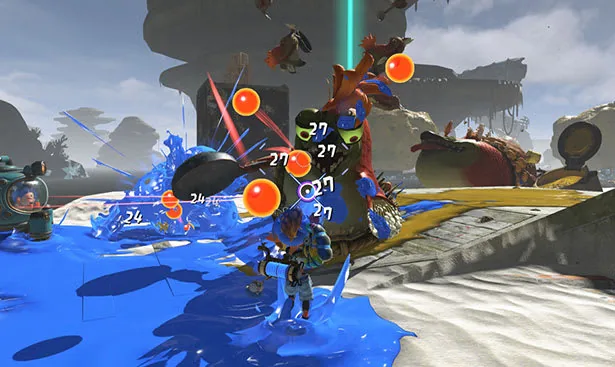
The safest Splatoon Raiders boss strategy starts before the arena
A good Splatoon Raiders boss guide is less about memorising an unverified tier list and more about making the next attempt repeatable. Before you enter, paint or identify the surfaces you need for movement, decide where you can retreat, and choose a weapon role that solves the pressure you are actually facing. During the fight, look for a safe opening, a readable warning, and a recovery cue before chasing damage.
The official Nintendo material checked for this guide confirms the Spirhalite Islands setting and a play loop built around ink movement, weapons, tanks, gadgets, equipment improvements, treasure hunting, and Salmonid danger. It does not publish a complete public boss database with every name, health value, phase timer, secret-boss unlock condition, or reward. The practical sections below are therefore preparation and note-taking methods, not invented encounter data.
Use the low-spoiler checklist first. If you are already stuck on a secret boss or the final boss, open the loadout and recovery sections, write down what changed between attempts, and only then compare the FAQ. Players who want route context can use the walkthrough and map route buttons below.
What to prepare before a Splatoon Raiders boss attempt
The first attempt often fails because the arena is treated as a blank damage check. A boss space is also a route: it has a usable surface, a retreat lane, a camera angle that reveals warnings, and a place where you can recover after losing control. Spend the first seconds looking for those anchors. If the game allows you to move around before the encounter locks in, paint the route you will use to leave and identify a landmark that remains visible from both directions.
Check your equipment and objective state before spending a long run on the fight. A newly available gadget, movement option, tank, or upgrade can change which part of the arena is safe. Do not assume that a community post used the same progression state as you. Record the upgrade level, weapon role, solo or co-op setup, and whether the attempt followed a long exploration route. That small note makes the next failure useful instead of mysterious.
- Paint the shortest safe return route before the arena becomes busy.
- Choose one landmark that you can see when facing both the boss and the exit.
- Keep one recovery option available instead of spending every resource on the opening burst.
- Write the objective state and player count beside any damage or timing note.
- Treat a tip as provisional until you can repeat it in the same context.
| Check | What to record | Why it matters |
|---|---|---|
| Movement surface | Ink lane, gap, height, water edge, or blocked platform | Shows whether retreat and repositioning are possible |
| Recovery cue | Landmark, safe corner, or route back to the arena | Prevents a lost attempt after one mistake |
| Loadout role | Coverage, mobility, burst pressure, or support | Connects the weapon to the actual threat |
| Progress state | Upgrade, gadget, objective, and player count | Stops advice from a different run being treated as universal |
| Evidence level | Tested, observed once, or community report | Keeps a useful tip separate from a promise |
How to read a boss encounter without guessing the phase order
Searchers often ask for the Splatoon Raiders final boss pattern as if one fixed chart can answer every attempt. That is a risky shortcut when the available public evidence does not establish a complete phase table. Instead, divide the encounter into observations that you can verify: what the boss does before pressure, what surface or position becomes unsafe, what opening allows damage, and what visual or audio cue tells you to stop chasing.
Use a three-part loop. First, watch the opening without spending your whole kit. Second, act during the safest readable window and keep your retreat lane visible. Third, reset your position as soon as the warning or arena condition changes. This method helps with a first clear, a rematch, and a co-op run because it does not depend on claiming that every attack occurs on an exact timer.
When an attempt fails, write the last confirmed decision rather than only the final hit. For example: the route was still inked, the camera lost the warning near the right platform, and the recovery lane was blocked after the second pressure cycle. That note points to a fix. ‘The boss is too strong’ does not.
- Opening: identify where you stand and which surface you need to preserve.
- Warning: watch the boss, arena, and camera for the earliest readable change.
- Window: use the weapon's useful pressure without crossing the retreat limit.
- Reset: return to the landmark or safe lane before the next warning arrives.
- Note: record the trigger, response, and result in one sentence.
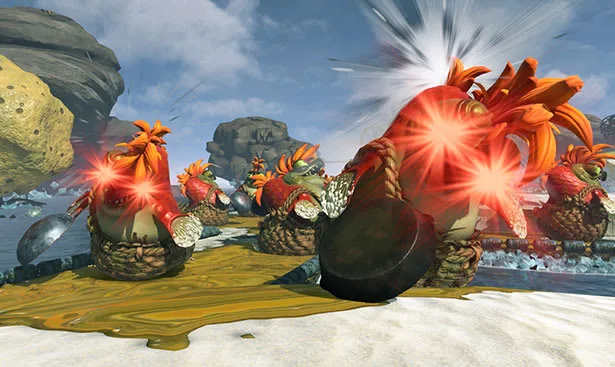
Choose a weapon role for the pressure in front of you
A boss guide should not call one weapon the best without a verified stat table and a defined encounter. A better question is what the fight asks you to do repeatedly. If the arena keeps taking away your movement surface, prioritise coverage and recovery. If the opening is short, look for controlled burst pressure that does not leave you empty when the warning arrives. If the route between attacks is long, mobility and safe repositioning may be more valuable than a larger number on a single hit.
The repository's weapons guide separates range, mobility, ink pressure, learning curve, route value, and multiplayer readiness. Use those roles as a planning language. A beginner can start with the option that leaves the clearest recovery path. A returning player can trade some safety for faster pressure after confirming that the arena stays readable. In co-op, assign jobs before the attempt so everyone is not chasing the same opening.
- Test a role for one full attempt before changing several loadout variables.
- Keep the weapon choice tied to a repeatable problem, not a copied tier label.
- In co-op, name the caller, pressure player, and recovery responsibility.
| Pressure you feel | Useful role to test | Simple success signal |
|---|---|---|
| You lose the route | Coverage and recovery | The retreat lane stays usable after a warning |
| The opening is brief | Controlled burst pressure | Damage happens without emptying the next recovery option |
| The arena is wide | Mobility and range | You can change position without crossing unsafe space |
| Adds or enemy pockets distract you | Reliable area control | The boss window remains visible after clearing pressure |
| Co-op players collide | Clear role split | One player calls movement while another takes the opening |
Plan for the secret boss and final boss without inventing spoilers
The Similarweb question keyword ‘how to beat secret boss Splatoon Raiders’ signals a direct how-to need, while ‘Splatoon Raiders final boss’ has a larger historical average but a much smaller current window. That combination suggests a page should answer preparation and recovery first. It should not fill the evidence gap with a made-up boss name, exact unlock percentage, or guaranteed drop. Use the terms as labels for the reader's problem, then explain what can be tested in the current build.
For a secret boss, keep a separate note for unlock or discovery evidence and combat evidence. Finding an encounter does not prove the complete unlock chain, and defeating it once does not prove a universal reward. For the final boss, record the route state, available upgrades, player count, and the point at which the arena changes. Those details let another player reproduce the useful part without forcing them to read every spoiler.
- Mark an unverified secret-boss location as provisional instead of publishing a guessed coordinate.
- Keep unlock evidence separate from attack or reward observations.
- Record the final-boss route state, upgrade state, and player count with each test.
- Use spoiler labels when a note reveals an encounter trigger or ending condition.
- Link back to the route page when the obstacle is navigation rather than damage.
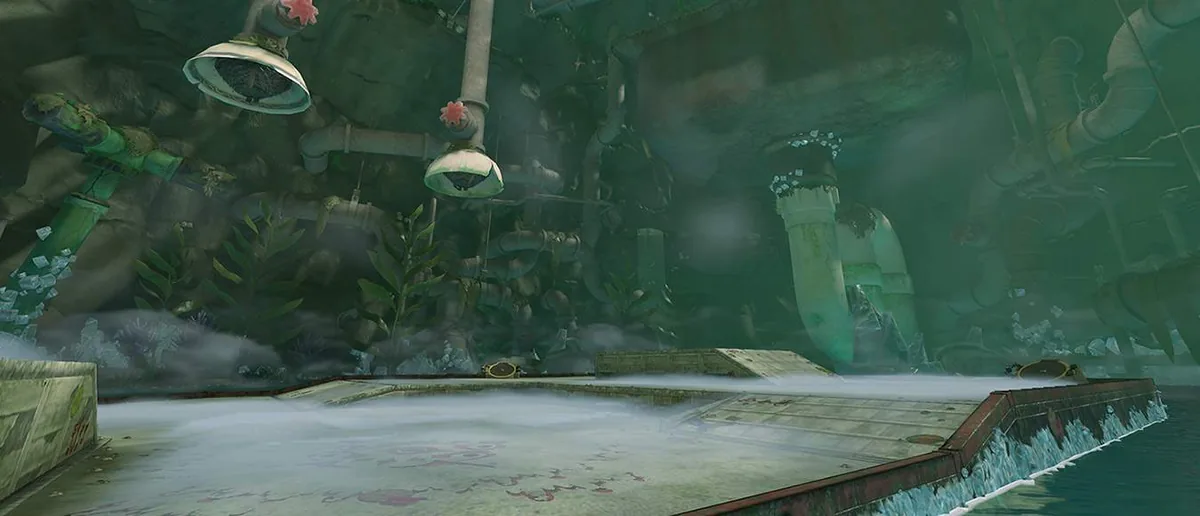
What to do after a failed boss attempt
Do not restart the entire game plan after one failed run. First decide whether the failure was route, information, execution, or endurance. A route failure means you lost the inked surface or could not return to the landmark. An information failure means the warning was not recognised. An execution failure means the opening was clear but the response missed. An endurance failure means the loadout or recovery plan could not last through the encounter. Each category suggests a different change.
Keep the next test small. Change one weapon role, one route note, or one communication rule, then repeat the same opening. If you change all three at once, a clear or failure cannot tell you what helped. In co-op, use a short call such as ‘reset’, ‘window’, or ‘route lost’ and agree that the caller's job is to preserve the attempt, not to claim a perfect damage cycle.
| Failure type | Likely fix | Do not change yet |
|---|---|---|
| Route | Repaint or mark the retreat cue | Every weapon variable at once |
| Information | Record the earliest warning and camera angle | Assume a fixed phase timer |
| Execution | Practise one response during the same window | Rewrite the whole route |
| Endurance | Keep recovery resource or choose safer pressure | Claim a universal best build |
| Co-op | Assign caller and reset language | Let every player chase the same opening |
Splatoon Raiders boss guide FAQ
How do I beat the secret boss in Splatoon Raiders?
Start by identifying the encounter's movement surface, retreat cue, and earliest readable warning. Use one weapon role for a full attempt, record what changes, and keep unlock evidence separate from combat observations. The official pages checked for this guide do not publish a complete secret-boss health or phase chart, so exact claims should be verified in the current game.
What is the Splatoon Raiders final boss strategy?
Treat the final boss as a route and information problem as well as a damage check. Preserve an inked retreat lane, watch for the first warning, act during a controlled opening, and reset before the arena becomes unreadable. Record your upgrade state and player count rather than assuming every community test used the same conditions.
Is there a confirmed Splatoon Raiders final boss name or health value?
The official Nintendo pages used here establish the world, movement, weapons, equipment, treasure, and Salmonid context, but they do not provide a complete public boss database in the checked material. This page intentionally avoids inventing a name, health total, phase timer, or guaranteed reward.
Can I fight the Splatoon Raiders final boss in co-op?
Check the current multiplayer rules and the objective state before planning a group attempt. The boss search cluster includes a small co-op variant, but that is not enough evidence to promise a universal player count or mode. Use the multiplayer guide for confirmed co-op conditions and assign a caller, pressure role, and recovery responsibility.
Should I use a specific Splatoon Raiders boss build?
Choose by repeated pressure: coverage and recovery when the route disappears, mobility and range in a wide arena, controlled burst when openings are brief, and clear role separation in co-op. A universal best build would require a verified stat and encounter table, so test one role at a time and record the result.
Does the boss guide spoil the Splatoon Raiders ending?
It is designed to be spoiler controlled. The first sections cover preparation and observation without naming an ending condition. The secret-boss and final-boss section discusses how to record evidence and links to the walkthrough for readers who want more route detail. Stop after the checklist if you only need a safer next attempt.
Official pages used for the boss-preparation boundary
These first-party Nintendo pages support the setting, movement, equipment, treasure, and Salmonid statements. They do not serve as a complete boss database; the practical checklist is an editorial method for testing the current game.
- Nintendo Australia: Splatoon Raiders world, gameplay, movement, and Spirhalite Islands details
- Nintendo US: Splatoon Raiders Nintendo Switch 2 product page